Dec 26

Local Business: Recovery Plan Seeds Success

Posted on December 26, 2024 at 1:17 PM by Bryan Taulbee

With the abundance of economic and business news every day, it can be easy to miss some of the smaller stories. But small business news is important too, and as we begin a new year, I want to highlight the Dayton Recovery Plan’s impact on business opportunity in our city.

The Dayton Recovery Plan – if you’re not already aware – is the City of Dayton’s strategic investment of federal American Rescue Plan Act funds designed to help communities recover from the COVID-19 pandemic. Our approach to local investment of these historically important resources is to seed transformation and leverage other resources to create long-term impact. With community guidance and City Commission approval, Dayton is making strategic investments in local businesses.

First Floor Fund energizes businesses and storefronts

A barber using clippers on a seated man in a barbershop.

Through the Dayton Recovery Plan, the City of Dayton established the $7 million First Floor Fund to provide essential empowerment for small businesses locating throughout the city.

With 29 approved loans and over 100,000 square feet of activated commercial space, the First Floor Fund marked its second birthday in October of 2024. It’s an achievement worth celebrating.

The fund’s primary and forgivable loans are administered by CityWide Development. Through this financial resource, businesses including salons and barber shops, restaurants, bakeries, wine bars, cigar bars, clothing stores, and others are popping up along key neighborhood corridors and downtown.

You can learn more about the First Floor Fund at daytonohio.gov/firstfloorfund. (Photo: Bourbon Barbers, East Third Street)

Resiliency Fund boosts minority-owned businesses

A man in a yellow shirt and cap operating a professional video camera outdoors.

The Resiliency Fund, managed and administered by the Miami Valley Urban League, is a Dayton Recovery Plan-supported initiative designed to help Black- and Brown-owned businesses continue to recover from the COVID-19 pandemic as they work to contribute to the Dayton economy.

With an initial investment of $1.5 million, Miami Valley Urban League has provided loans to 140 businesses through 2024 (totaling $742,500).

These loans direct needed operating and capacity-building support and build economic vitality in underserved communities. Participating enterprises represent sectors including construction, professional services, consumer services, and retail. (Photo: Souley Oumarou, owner, Dayton-based AmeriFilms)

Direct grants build futures

6888 Kitchen Incubator Logo.

The historic opportunity of the American Rescue Plan Act has also made it possible for the City of Dayton to provide direct support to local ventures, with two highlighted here.

6888 Kitchen Incubator is a food-industry catalyst providing training, support resources, and commercial kitchen space for under- resourced entrepreneurs developing food businesses. This unique organization operates from the Dayton Arcade and is named in honor of the U.S. Women's Army Corps Six Triple Eight Battalion (a group with a special duty of getting millions of pieces of mail to World War II troops in the field and led by Lt. Col. Charity Adams Earley, who would later contribute much to Dayton's civic life).

On a smaller scale, Speedie Daycare is a long-established childcare center providing this crucial service to Dayton families. With Dayton Recovery Plan help, the woman- owned business has been able to renovate facilities and serve a new generation of local families.

Dayton approach inspires a case study

The Dayton Recovery Plan’s approach to supporting equity in business development is the subject of a case study by the prestigious New School and its Institute on Race and Political Economy. You can see the study at daytonohio.gov/drpcasestudy.

For more details and ongoing updates on the Dayton Recovery Plan, go to daytonohio.gov/drp.


Jul 30

Private and public investment energize downtown

Posted on July 30, 2024 at 9:59 AM by Justin Schmidt

Exciting developments are happening in downtown Dayton, as the region’s business center transforms into a technology jobs hub and vibrant neighborhood. Let’s dive into some of the key projects and business activities driving downtown forward with about $2 billion in investments completed or underway since 2010.

Downtown: The place to invest and grow

Dine’ Corporation: The Scottsdale, AZ-based IT services firm acquired and is renovating 714 E. Monument Ave. and is committed to creating 100 new jobs. The investment reflects confidence in downtown Dayton’s growing status as a technology hub with proximity to WPAFB.

Kaney Aerospace: A growing company with ties to aerospace manufacturers and the U.S. Air Force, Kaney purchased 205 E. First St. to relocate it offices from Illinois.

RA Consultants: The Dayton branch of the Cincinnati-based engineering firm has just moved into 111 W. First St. Their presence adds to city’s growing status as a center for professional and technical services.
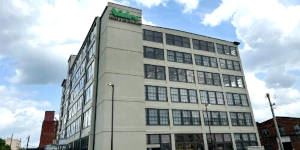
Nidec Press and Automation building in downtown Dayton.

Henny Penny: In 2022, Eaton-based Henny Penny opened its Five Rivers Campus Office at 601 E. Third St. The office hosts a team of engineers and software developers dedicated to innovation and collaboration in the downtown environment.

Nidec Press & Automation: Minster-based Nidec established a 12,500-sq.-ft. space at 15 McDonough Street in downtown’s Oregon East district in 2022. The Dayton center is a hub for global services including engineering, software, human resources, and purchasing.

Dayton-headquartered Stratacache creates digital signage solutions for customers worldwide. Stratacache announced in June it will open its new Sales Center of Excellence, with 100 employees, in the Premier Health Center building at Second & Main. The company looks forward to continued growth

First Floor Fund: Activating small businesses

The City of Dayton established the $7 million First Floor Fund as a key element of the Dayton Recovery Plan, the City’s framework for transformational investment of federal

COVID-19 relief funds. The First Floor Fund provides primary and forgivable loans to entrepreneurs, business owners, and developers along strategic corridors throughout Dayton, including downtown, with an aim of fueling small, first-floor businesses. CityWide Development Corporation administers the initiative.
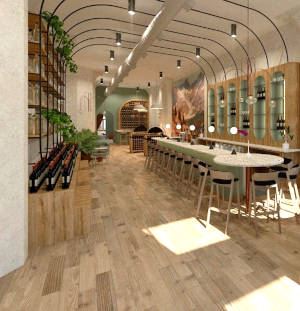
Interior of Joui Wine Bar.

Of 23 loans secured to date through First Floor Fund, these businesses have opened their doors in or near downtown:

  • Shag Studios
  • Mintha’s Boutique
  • Reserve on Third
  • Baker Benji’s
  • Bourbon Barbers
  • Gather by Ghostlight
  • Joui Wine Bar
  • The Local 937

These three are anticipated to open soon: Morgan’s Catering, Wisdom Beauty, and Salon on North Main.

An in-demand address

Living in downtown Dayton continues to be in high demand, and it’s easy to see why. Being just steps away from the best independent restaurants and breweries, art galleries and theaters, baseball games and festivals, kayaking and recreation trails is very appealing, especially to young professionals.

From January 2021 through June 2024, 988 housing units were added downtown (new construction and redeveloped properties):
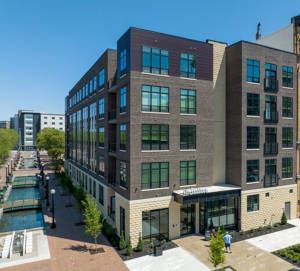
The Sutton building in downtown Dayton.

Market Rate: 438 units
Home Telephone Company Building (former Price Stores) – 19 units
The Sutton – 71 units
The Monument Apartments – 124 units
The Flight Apartments – 143 units
Flats at South Park Phase 2 – 51 units
Graphic Arts Building – 20 units
Dayton Arcade – 10 units

Income-Restricted: 550 units
Biltmore Tower – Rehab of National Register-listed building with 230 affordable apartments
Jaycee Tower – Rehab of 204-unit affordable high-rise
Dayton Arcade – 116 new affordable units in a National Register complex of buildings.

Infrastructure sets the stage

Municipal and other governments can lead community transformation with investment in public Infrastructure, setting the stage for the private sector to invest at the back of the sidewalk. The City of Dayton (working with partners including Five Rivers MetroParks, Montgomery County, the Miami Conservancy District, and the Ohio Dept. of Transportation) is in the midst of an aggressive, multi-year effort to modernize and improve streets and other infrastructure.

From January 2021 through June 2024, there has been $885 million in infrastructure investment (including $16.7 million by the City of Dayton) in and near downtown, including highways and corridors leading to the city center. These investments are very recognizable to workers, drivers, cyclists and pedestrians in our city. In addition to major highway projects, the resulting improvements include:
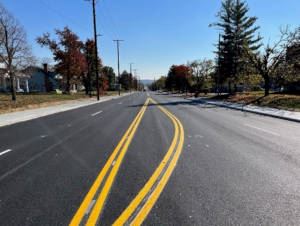
Freshly repaved Salem Avenue.

  • Salem Avenue reconstruction
  • East Second Street Cycle Track
  • Keowee Street rehab
  • Springfield Street reconstruction
  • Valley Street realignment
  • Wright Dunbar Bikeway
  • Third Street Bridge replacement
  • Deeds Point Pedestrian Bridge
  • Pedestrian Safety improvements
  • Jefferson Street reconstruction
  • Oregon District/East Fifth Steet bollards.

Collaboration creates results

Dayton is known for the spirit and practice of collaboration. From January 2021 through June 2024, $520M in privately managed projects were completed in the Greater Downtown geography. With the City of Dayton making $13 million in direct project investments and $40 million in related public infrastructure improvements, the City leveraged nearly $10 in private investment for every public dollar spent. The completed projects receiving City investment are the Dayton Arcade, the Gem City Market and West Social Tap & Table (Wright Dunbar food hall).

The City is also making direct project investments totaling $3.7 million to transformative projects under construction or set to open soon, including The DELCO, Hotel Ardent (North Main Street at First Street) and site preparation for the Townes at Wright Dunbar, a 26-unit townhome development.

In the pipeline

Many developments are in progress or planned in downtown Dayton. The two largest projects underway—the comprehensive, $45 million renovation of the Dayton Convention Center by the Montgomery County Convention Facilities Authority and Windsor Companies’ redevelopment of the 22-story Deneau Tower—are expected to be complete by late 2024/early 2025. Nearby, the 94-key Hilton Garden Inn at the Dayton Arcade will welcome guests by the end of 2024.

Weyland Ventures’ transformation of the former St. Paul Lutheran Church on Wayne Avenue to a $22 million boutique hotel complex is in the late planning stages. In the near-downtown Grafton Hill neighborhood, the historic, 43-unit Commodore Apartments are undergoing a $7 million renovation, also by Windsor Companies. And two new neighbors for the Second Street Public Market are under construction—The Silos food hall and the 102-unit Webster Station apartment/retail complex.

Feb 27

Recovery Plan: Seeding Transformation

Posted on February 27, 2024 at 12:08 PM by Bryan Taulbee

When City of Dayton leaders learned Dayton would receive around $138 million in American Rescue Plan Act funds, I was both thrilled and terrified—thrilled that our community and city government would benefit from a once-in-a-lifetime opportunity, but terrified that deadlines and competing priorities might push our plan toward less-than-optimal uses.

While news of the funds Dayton would receive was exciting and inspiring, it was evident that even $138 million would not stretch as far as many people assumed. We also grew to understand that our local ARPA program would generally be catalytic in nature, seeding transformation for the future, rather than being a one-and-done approach. 

U.S. Department of Treasury guidance allowed a range of funding uses that included removal or restoration of blighted properties, infrastructure repairs, and support for transformative community-based initiatives and small business growth—all purposes very suitable to Dayton. 

We got to work quickly, with an intention of crafting a plan strongly influenced by community need and input, not just the priorities and needs identified by City Hall or mainly for municipal operations. We knew Dayton deserved a recovery plan that is both responsive and responsible. 

We published an online survey that attracted 1,720 respondents and held a series of seven public meetings in July of 2021, coordinated by community engagement staff. 

At the meetings, we built awareness about the federal legislation—what it is and isn’t—and about local government’s role in developing a plan for spending/distributing dollars. Then, we listened and documented suggestions and requests for spending priorities. 

There were many ideas, but community sentiment coalesced around neighborhood needs and improvements, including tackling the housing demolition backlog that had grown during the Great Recession and foreclosure crisis, and other housing improvements. Additional priorities identified by the community included support for small businesses and Black- and Brown-owned businesses, and other means of economic recovery.

These priorities became the “what” of our local plan. Data drawn from social and health determinants (including populations affected by COVID-19) determined the “where,” the five targeted neighborhoods that would become the focus (though not the entirety) of our efforts.

In June of 2021, the Dayton City Commission adopted a resolution outlining the intent to invest ARPA proceeds into investment areas, a framework that would be known as the Dayton Recovery Plan. The investment areas are: 

  • Improving Our Neighborhoods (with $55 million in dedicated funding);
  • Supporting Black & Brown Businesses ($7.6 million);
  • Aiding Community & Small Business Recovery ($7.3 million);
  • Enhancing Critical City Services ($21.5 million); and
  • Catalyzing Economic Recovery ($10.8 million). 

In addition, funding ($33 million) was set aside to replace municipal revenue lost during the pandemic. Because revenue exceeded projections in 2022 and 2023, the City of Dayton has been able to infuse $20.8 million in one-time capital investments from revenue replacement to investments such as equipment for the Police, Fire and Public Works Departments, technology improvements, and street resurfacing. 

Successful proposals from organizations and small businesses with projects and programs fitting the investment areas, as well as projects managed directly by the City of Dayton, became the “how” of our recovery plan. 

As of Sept. 30, 2023, contracts and agreements already funded through City Commission approval include blighted property demolition ($5,610,000), housing rehab/repair ($5,880,000), park upgrades ($1,056,000), and Black & Brown businesses ($2,951,000). Each of these totals represents multiple awardees.  Additional millions are obligated to successful proposals for future awards.

The impacts of the Dayton Recovery Plan are increasingly visible in neighborhoods, parks, and storefronts. Much more activity will occur in 2024. We look forward to seeing catalysts transform promise to practice. Please follow our progress at daytonohio.gov. 

Photo: A new parking area and sidewalks at McIntosh Park are among the many community improvements made possible by the Dayton Recovery Plan. 

McIntoshPark2023